Comparisons · phones
A phone that lasts for years
What EU law already guarantees when you buy a phone, and what you need to check yourself: updates, repairability, battery and storage.
Text drafted with artificial intelligence. The topic, the angle and the final review are Ibrahin's. How AI is used here
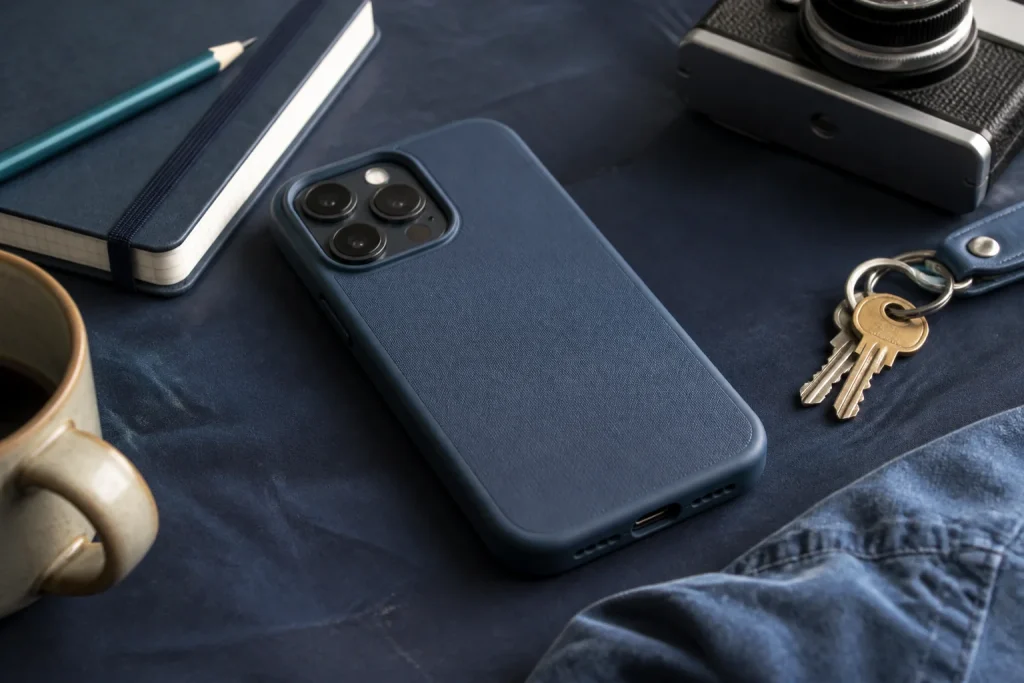
What I would look at first
These go to Amazon. If you buy, Ibrahin earns a commission and you pay the same price.
Picked with this guide's criteria, without testing them. How it is decided
What has happened
Since 20 June 2025, two EU regulations set a minimum for almost every phone sold here, even if the brand never mentions it. Very few are left out: phones with a rollable screen, those built for high-security communications and those made for areas with a risk of explosion; foldables are included.
EU legal minimum, since 20 June 2025
What the law requires from the brand
Even if it promises nothing anywhere
There are two important details. First: those periods are counted from when the manufacturer stops selling that model, not from the day you buy it. Second: the law does not say how many updates the brand must release. It says that, until at least five years after the model stops being sold, any updates it does release must be free and reach every phone of that model. The European Commission explains it as a way of making sure you keep receiving them for that time, but it is not a figure the brand promises you: that is why it pays to check what the brand guarantees in writing.
Why it matters to you
That floor doesn’t mean every brand gives the same: some promise seven years of updates and others far fewer. And what usually retires a phone isn’t that it gets slow, but that it stops getting patches, the battery wears out or a repair costs more than the phone itself. Choosing well when you buy saves you replacing it early.
The specific years each brand promises, with names, are in what each brand promises.
What you can do
1. Look at the energy label in the shop
For smartphones it is compulsory in the shop and, online, it must be shown next to the price. It shows battery life, charge cycles, drop resistance and dust and water protection. The most useful part is the repairability grade, from A to E.
2. Check how many years of updates the brand guarantees
Look it up on the manufacturer’s official website and check from which date it is counted. The brand must also state it, in years, in the product information sheet it publishes in the EU energy label database. The manual or other documents that come with the phone must show how to reach that sheet: a web address, a QR code or the product’s registration number. A phrase like “extended support” is no substitute for a number. These are some of the ones that promise the most years:
3. Ask about the battery and repairs
The battery is the part that wears out most. The law requires spare batteries to be available and that you can replace it without being a technician, except on phones whose battery and water resistance pass tougher tests. Even so, ask how much the replacement costs and who does it near you. The same goes for the screen: a repair that is possible but expensive or far away is not a solution.
4. Choose storage with room to spare
Photos, videos and apps take up more and more space. With just enough capacity you’ll end up deleting things or paying for cloud storage you hadn’t planned.
5. Start from how you really use it
Don’t pay for a professional camera if what matters to you is reading the screen comfortably and having the battery last the day. And buy where the warranty and returns are clear.
The recommendation
Before comparing cameras, compare this:
- How many years of updates does the brand guarantee for that model, and from when are they counted?
- What repairability grade does the energy label show?
- How much does a battery replacement cost and who does it?
- Does it have enough storage for several years?
Sources
- Commission Regulation (EU) 2023/1670 on ecodesign for smartphones and tablets — EUR-Lex
- Delegated Regulation (EU) 2023/1669 on energy labelling of smartphones and tablets — EUR-Lex
- New EU rules for durable, energy-efficient and repairable smartphones and tablets — European Commission
- Do Android update requirements cover only minor versions? — European Commission
- Regulation (EU) 2025/2006 amending the ecodesign regulation — EUR-Lex
Related
Review
Responsible for publication: Ibrahin. Date: 2026-09-02. Last checked: 2026-10-17. Legal minimums taken from the text of the EU ecodesign and energy labelling regulations for phones and tablets.
Where to see it
Links to the maker's or the service's own pages. They are not affiliate links and earn no commission.
Where to buy it
Paid links. They open an Amazon search using this guide's criteria. If you buy something after following one, Ibrahin earns a commission and you pay the same price.
- Google Pixel 10 and 10a: seven years of updatesamazon.es · paid link
- Samsung Galaxy S26: seven years of updatesamazon.es · paid link
- Recent Samsung Galaxy A: up to six yearsamazon.es · paid link
As an Amazon Associate, I earn from qualifying purchases. They are the models compared in Phones that last, chosen for the years of updates each manufacturer promises. None has been tested here: the decision is yours.
How this recommendation was made
Legal minimums taken from the EU ecodesign and energy labelling regulations, checked on 17 October 2026.
Amazon searches checked on 9 October 2026: they show the models from the comparison. Prices change without notice: check before buying.
This guide contains paid Amazon links, marked as such. If you buy after following one, Ibrahin earns a commission and you pay the same price. No recommendation in this text depends on that commission.