Comparisons · phones
Phones that last: what each brand promises
The years of updates each brand promises in writing, when they really start counting and which phone to choose depending on what you want.
Text drafted with artificial intelligence. The topic, the angle and the final review are Ibrahin's. How AI is used here
What I would look at first
These go to Amazon. If you buy, Ibrahin earns a commission and you pay the same price.
Picked with this guide's criteria, without testing them. How it is decided
What has happened
Manufacturers have started competing on years of updates, and they now publish them in writing. These are their commitments as of 17 October 2026, as each one publishes them:
Published commitments, as of 17 October 2026
Years of updates
Operating system / security patches
Three cases are worth reading carefully:
- Apple doesn’t promise versions, but it does promise a security minimum. It doesn’t say how many iOS versions each iPhone will get. What it does publish, under the UK law on the security of connectable devices, is a minimum security support period: five years from first supply, as stated in the iPhone 16 declaration. And in practice it lasts longer: iOS 27, the current version, reaches back to the iPhone 11 and the second-generation SE, from 2019 and 2020.
- Xiaomi depends on the model. Its general page says it “typically” maintains security updates for “at least 2 years” after the first shipment of each model, and that for some models it “may” support them for 3 years or longer. Some product pages go further: the Spanish page for the Redmi Note 15 promises six years of security updates. It does not publish Android versions on the product pages we checked.
- Beware of Samsung’s “up to”. In the top range the commitment is firm: the Galaxy S26 “supports” seven OS upgrades and seven years of security. For the Galaxy A57 and A37 it says “up to six”. A commitment is not the same as a ceiling.
Why it matters to you
Because none of the brands that say so counts those years from your purchase. Google counts them from when the phone first went on sale in its US store; Samsung, from the global launch; Nothing, from when the device first became available on the market; Xiaomi, from the model’s first shipment. If you buy a two-year-old phone because it’s on offer, you have two years fewer left. Fairphone makes it easy: it publishes the year support ends, 2033.
On top of that, EU law sets a minimum for every brand: for new phones put on sale in the EU since 20 June 2025, any updates the brand releases until at least five years after it stops selling the model must be free and reach every phone of that model. It’s explained in how to choose a phone that lasts for years.
What you can do
1. If you want an end date in writing
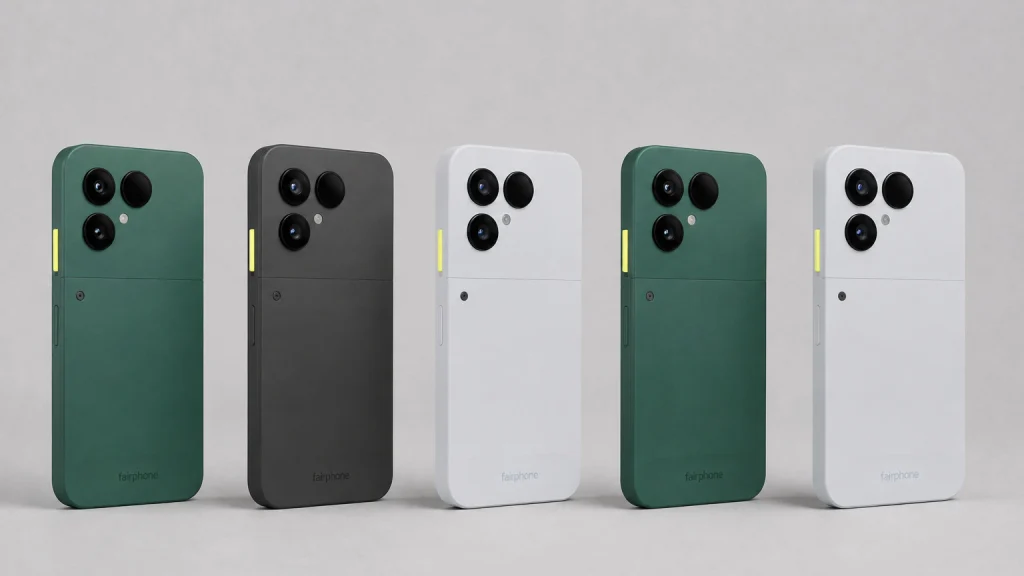
Fairphone puts the year support ends on its phone’s web page: 2033, for both the Gen. 6 and the Gen. 6+. In Europe it sells through its own shop and resellers; Amazon only appears on its list for the United States.
2. If you want seven years without giving anything up
A Pixel 8 or later, Pixel 11 included, or a Galaxy S25 or S26. They promise seven years of system and seven of security updates. The newer the model, the more years you have left: the Pixel 11 went on sale in August 2026 in the United States, the date Google counts from. The Pixel 10 (August 2025) and 10a (March 2026) also get seven years, counted from those dates.
3. If budget comes first
A Galaxy A57 or A37 gives up to six years, and a Nothing Phone (3a) gives six of security. Some Xiaomi phones, like the Redmi Note 15, also promise six years of security on their product page. Check the figure for the exact model on the brand’s website before you buy.
4. Look at the energy label in the shop
It is compulsory and has a repairability grade from A to E. Years of updates are not on the label: you have each brand’s figure in the table above, and the brand must also declare how many years it guarantees in the product sheet it publishes in the EU energy label database.
The recommendation
If you can afford it, choose among the ones that promise seven years and buy the newest model that suits you: the years start counting at its launch, not at your purchase. If the budget doesn’t stretch, a phone with six years of security in writing is better than a more powerful one with two.
None of these phones has been tested here: we compare published commitments, not user experience. The Amazon links are paid and change nothing the article says.
Sources
- Learn when you’ll get software updates on Google Pixel phones — Google
- Find when your Pixel device became available — Google
- Google introduces Pixel 11, Pixel 11 Pro and Pixel 11 Pro XL — Google
- Galaxy S26: software updates — Samsung
- Galaxy S25: seven generations of updates — Samsung
- Galaxy A57 and A37 — Samsung
- Phone (3a) — Nothing
- motorola edge 70 — Motorola, in Spanish
- Security updates — Xiaomi
- REDMI Note 15 — Xiaomi, in Spanish
- How long will my Fairphone receive updates? — Fairphone
- Fairphone (Gen. 6) and (Gen. 6+): dates and availability — Fairphone
- The Fairphone (Gen. 6) and (Gen. 6+) — Fairphone
- How to download iOS 27 — Apple
- iPhone 16 security support statement (UK) — Apple
- Regulation (EU) 2023/1670, ecodesign — EUR-Lex
- Delegated Regulation (EU) 2023/1669, energy labelling — EUR-Lex
Related
Review
Responsible for publication: Ibrahin. Date: 2026-09-04. Last checked: 2026-10-17. The commitments come from each manufacturer’s official pages. Motorola’s general policy could not be consulted because its website blocks automated access: the figure is the one on the edge 70 product page. No prices are included.
Where to see it
- See at Fairphonefairphone.com
- See at Google Pixelstore.google.com
- See at Samsung Galaxysamsung.com
- See at Nothinges.nothing.tech
Links to the maker's or the service's own pages. They are not affiliate links and earn no commission.
Where to buy it
Paid links. They open an Amazon search using this guide's criteria. If you buy something after following one, Ibrahin earns a commission and you pay the same price.
- Google Pixel 10 and 10a: seven years of updatesamazon.es · paid link
- Samsung Galaxy S26: seven years of updatesamazon.es · paid link
- Recent Samsung Galaxy A: up to six yearsamazon.es · paid link
As an Amazon Associate, I earn from qualifying purchases. No specific model is linked because none has been tested here: the search applies the criteria and the decision is yours. Fairphone is not listed because it is not sold on Amazon Spain.
How this recommendation was made
Commitments taken from each manufacturer's official pages and from the European ecodesign regulation, on 17 October 2026.
Amazon searches checked on 9 October 2026: they show models from the brands and ranges in the table. Prices change without notice: check before buying.
This guide contains paid Amazon links, marked as such. If you buy after following one, Ibrahin earns a commission and you pay the same price. No recommendation in this text depends on that commission.